
Hibiscus Quality Grades Explained
While all hibiscus may come from the same plant, not every shipment offers the same cleanliness, consistency, or suitability for commercial use. Understanding how hibiscus is graded helps buyers set clear purchasing specifications, compare suppliers objectively, and ensure consistent quality across the supply chain.
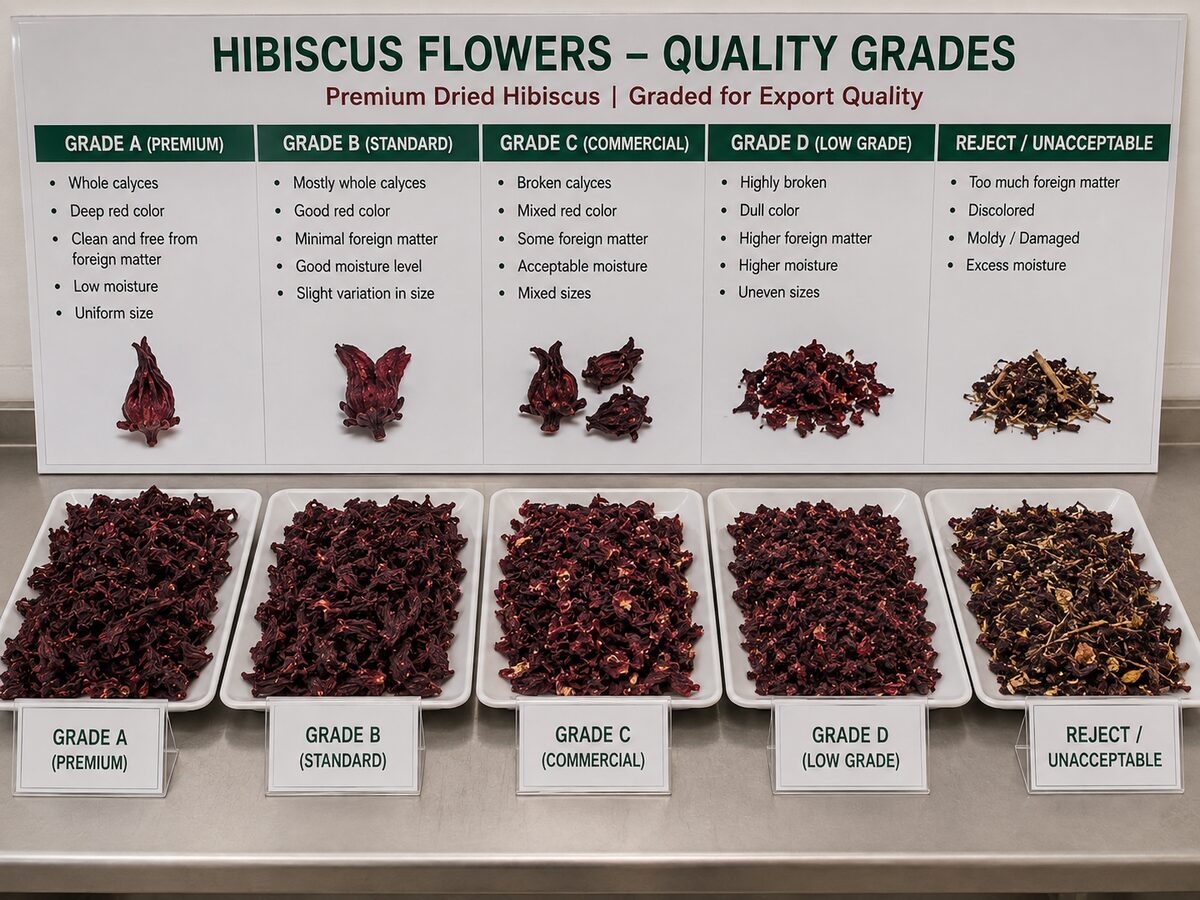
Why Hibiscus Quality Grades Matter
Quality grading serves as a common language between buyers and suppliers. Rather than relying solely on visual inspection, grading provides measurable criteria that define product expectations.
A consistent grading system helps buyers compare quotations from different suppliers, specify product requirements in contracts, maintain consistency across production batches, reduce quality disputes after shipment, improve manufacturing efficiency, and meet customer and regulatory expectations.
Understanding the Hibiscus Grading System
There is no single global grading authority for dried hibiscus flowers. Instead, the grading system is generally based on commercial specifications agreed upon between buyers and suppliers.
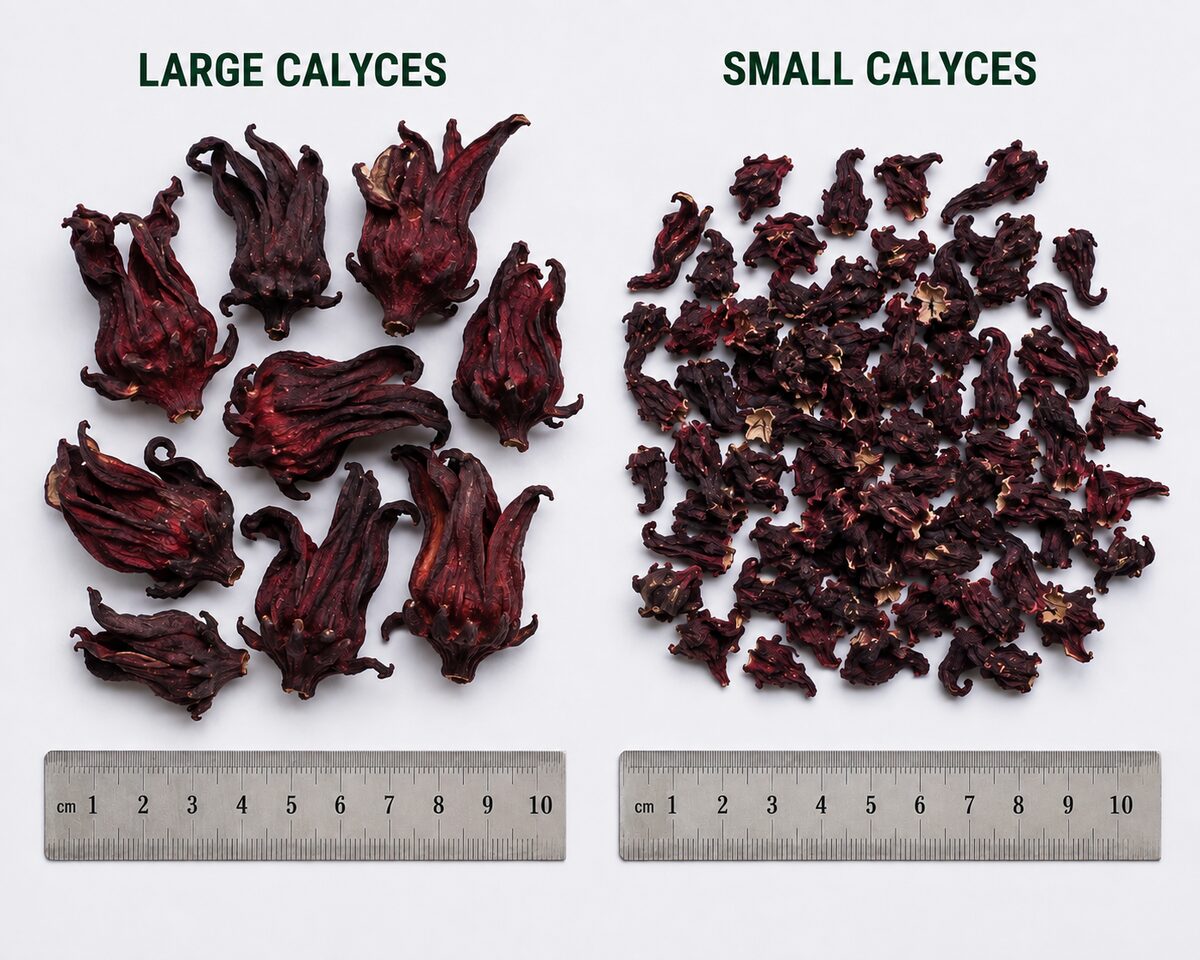
Although requirements vary by destination market, grading commonly evaluates color consistency, calyx size, purity, moisture content, foreign matter, physical defects, aroma, and overall appearance. The higher the consistency across these parameters, the higher the commercial grade.
The Main Factors Used in Hibiscus Quality Grades
1. Color
Premium lots display bright ruby red, crimson, deep red, or burgundy. Uniform coloration is preferred over mixed profiles.
2. Calyx Size
Larger, fuller calyces offer better visual appeal, processing consistency, and higher perceived value in premium markets.
3. Purity
The percentage of actual hibiscus in a shipment. Higher purity — fewer stems, leaves, dust, or stones — commands higher value.
4. Moisture Content
Proper levels prevent mold, reduce microbial growth, extend shelf life, and maintain color and aroma during transportation.
5. Physical Defects
Inspectors evaluate breakage, discoloration, insect damage, mold contamination, and mechanical damage. Premium lots show minimal defects.
Aroma & Appearance
A strong natural aroma and consistent overall appearance round out the grading criteria.
What Is Hibiscus Grade A?
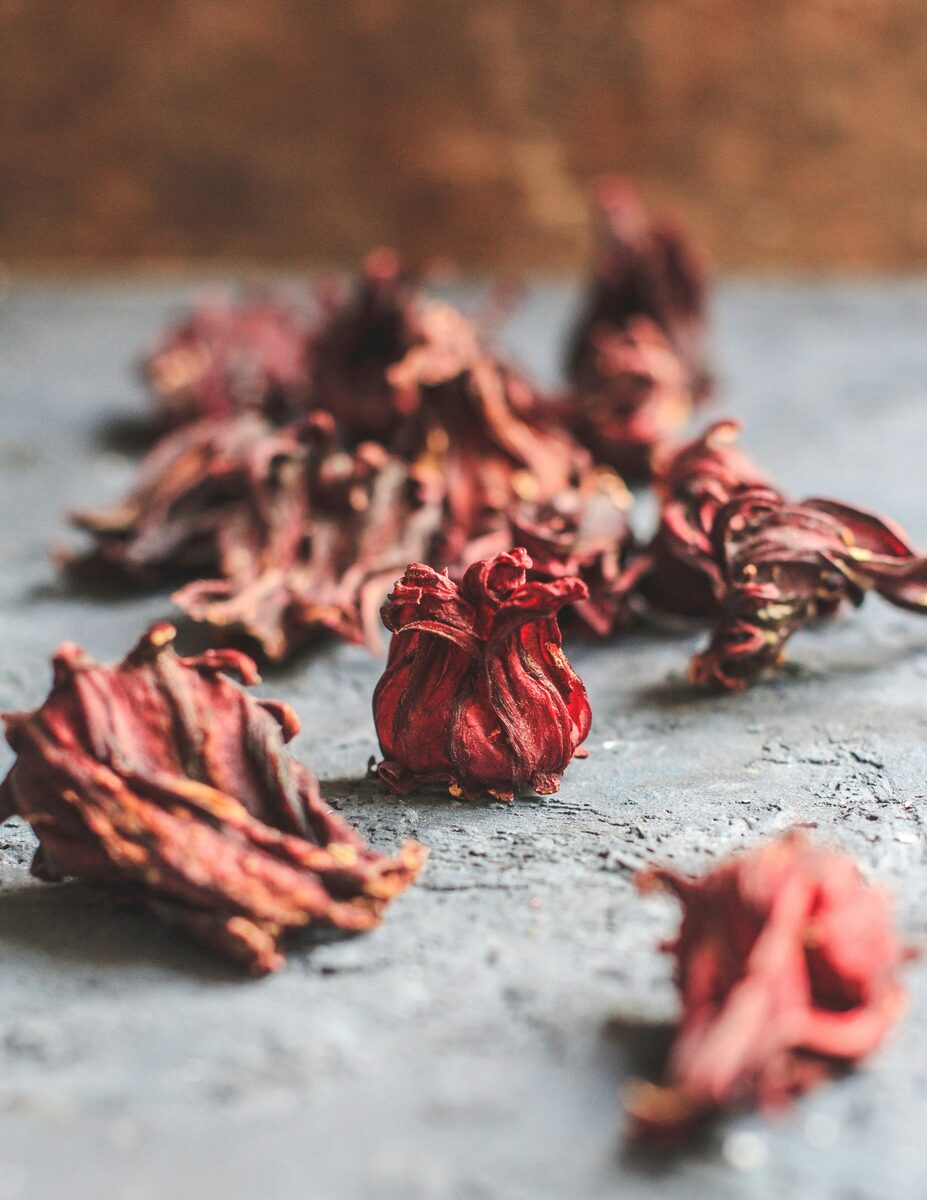
Hibiscus Grade A is commonly used to describe premium-quality dried hibiscus that meets higher commercial standards: excellent color consistency, large well-preserved calyces, high purity, low foreign matter, proper moisture levels, minimal physical defects, and strong natural aroma.
Because there is no universally standardized grading system, buyers should always request detailed product specifications rather than relying solely on grade names.
Lower commercial grades — with smaller calyces, more broken pieces, or mixed color profiles — are not necessarily inferior products. A beverage manufacturer producing concentrates may prioritize pigment extraction over calyx appearance, while a retail tea brand may prefer larger, more visually attractive flowers.
The Hibiscus Sorting Process
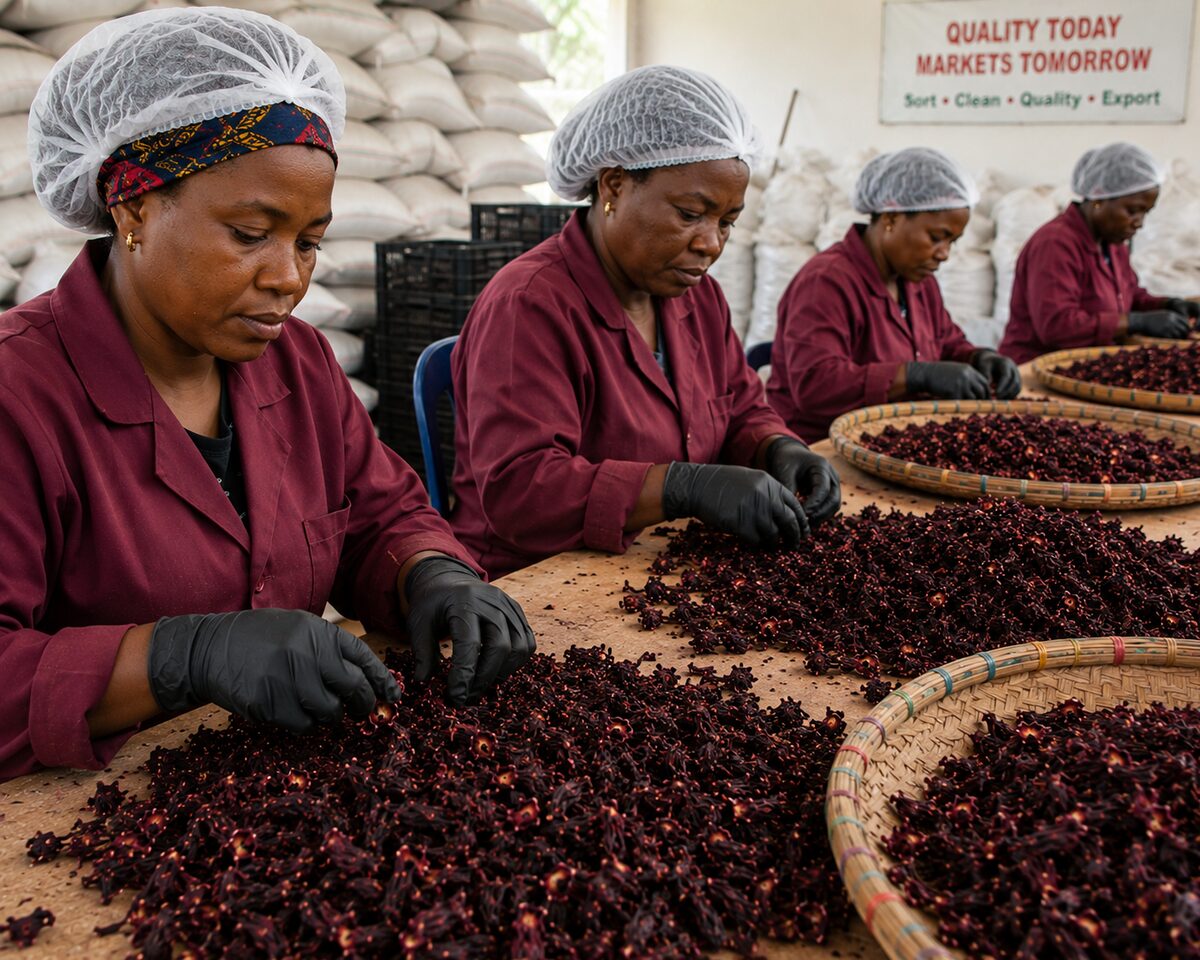
An effective sorting process is essential for achieving consistent quality grades. Sorting begins immediately after drying and continues until the product is ready for packaging.
 Initial Cleaning & Fine Sorting
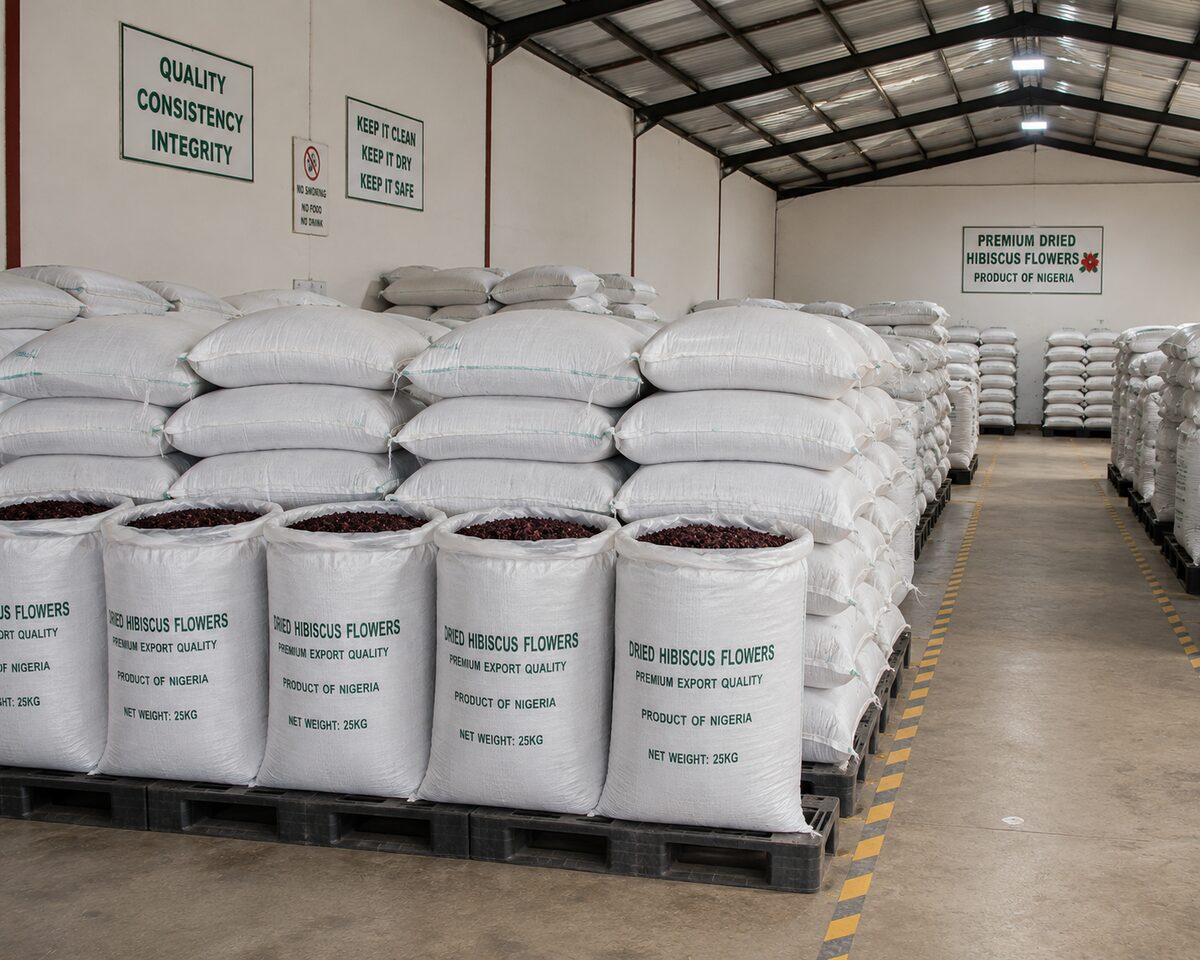 Final Inspection & Storage
Initial cleaning removes larger foreign materials such as stems, leaves, stones, and twigs. Fine sorting then removes broken material, damaged calyces, discolored flowers, and remaining impurities. Before packaging, a final quality inspection verifies that the product meets the agreed specifications. Depending on the supplier's operations, sorting may be carried out manually, mechanically, or through a combination of both.
Choosing the Right Grade for Your Industry
Selecting the appropriate grade depends on how the hibiscus will be used, rather than simply choosing the highest available grade.
Tea Manufacturers
Attractive appearance, uniform calyx size, consistent color, and low foreign matter.
Beverage Producers
Color extraction, anthocyanin content, product consistency, and reliable supply volumes.
Herbal Product Manufacturers
Product purity, traceability, moisture control, and natural aroma.
Food Ingredient Companies
Standardized specifications, consistent quality, stable storage, and efficient processing.
Making Informed Grade Decisions
Understanding hibiscus quality grades enables buyers to make informed sourcing decisions, establish clear procurement specifications, and maintain consistent product quality. Rather than relying solely on labels such as "Grade A," buyers should evaluate the complete grading criteria — purity, moisture content, color consistency, calyx size, and the supplier's sorting process. Our guide on identifying premium quality hibiscus covers these evaluation steps in detail.
Nigeria has become one of the world's leading exporters of dried hibiscus flowers thanks to favorable climatic conditions, extensive cultivation, experienced producers, and reliable export supply. When properly processed and graded, Nigerian hibiscus consistently meets the requirements of buyers in the tea, beverage, food, and wellness industries.
Request a Product Specifications Sheet or Quotation
Need detailed grade specifications for your procurement requirements? Request our product specifications sheet or a quotation, and review our dried hibiscus flowers product page for full export specifications.
Request Specifications / QuotationContact Hibiscus Valleys
At Hibiscus Valleys, we supply premium Nigerian dried hibiscus flowers that are carefully sorted and prepared to meet international buyer specifications. Whether you require bulk quantities for tea manufacturing, beverage production, food processing, or herbal applications, our team is committed to delivering consistent quality and dependable export service.
Discuss Your Specifications